


Dried Goji Berries | No Sugar Added
Price range: $30.99 through $58.88 — available on subscription
Product Description
Gerbs Dried Goji Berries (Wolfberries)
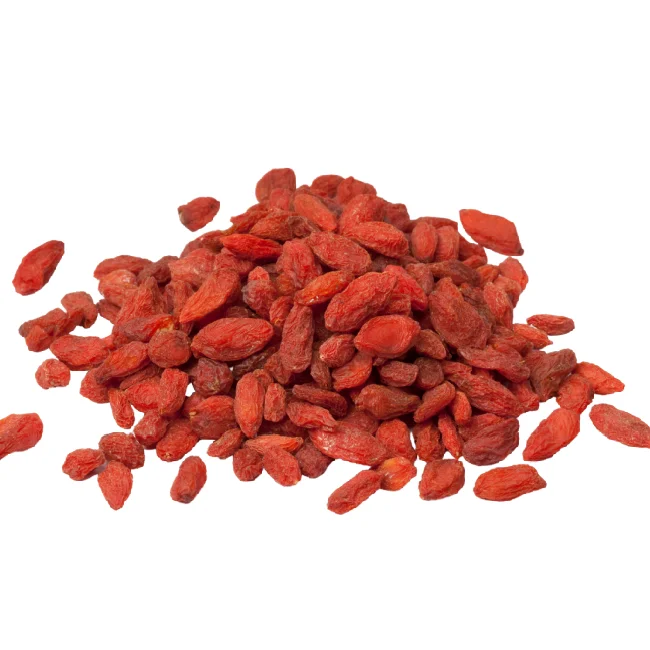
Sweet-tart, chewy, and bursting with antioxidants, Gerbs Dried Goji Berries are a vibrant superfruit perfect for snacking, smoothies, oatmeal, and baking. Often called wolfberries, these nutrient-rich red berries have been valued for centuries for their wellness-supporting properties and naturally energizing benefits.
Hand packaged on dedicated Gerbs equipment in Johnston, Rhode Island, each bag delivers freshness, quality, and delicious versatility in every bite.
Key Benefits
-
Sweet-tart superfruit with a soft, chewy texture
-
Packed with antioxidants like zeaxanthin and beta-carotene
-
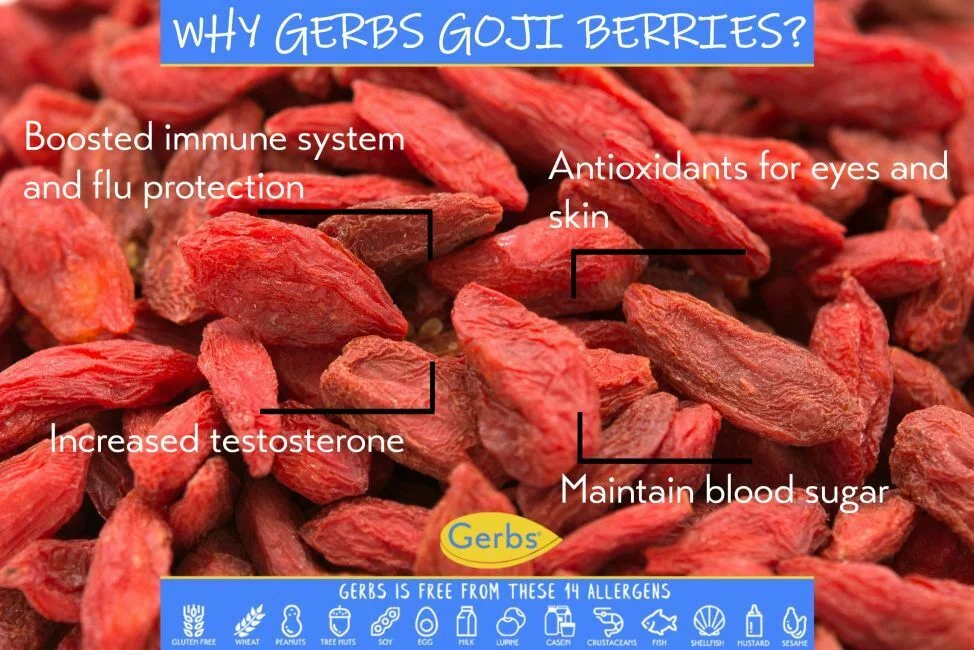
Supports eye health, immune function, and overall wellness
-
Good source of fiber, vitamins, and essential minerals
-
Perfect for trail mix, smoothies, yogurt, baking, and tea
-
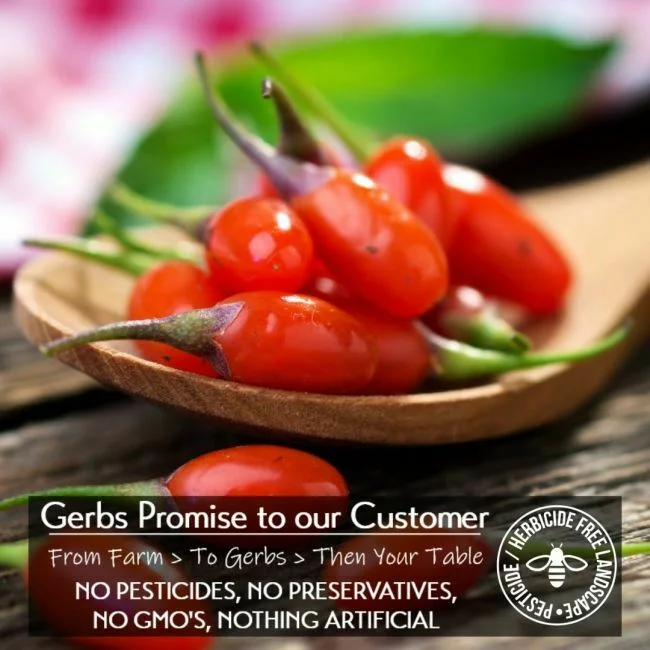
No preservatives or artificial additives
Available Bag Sizes
-
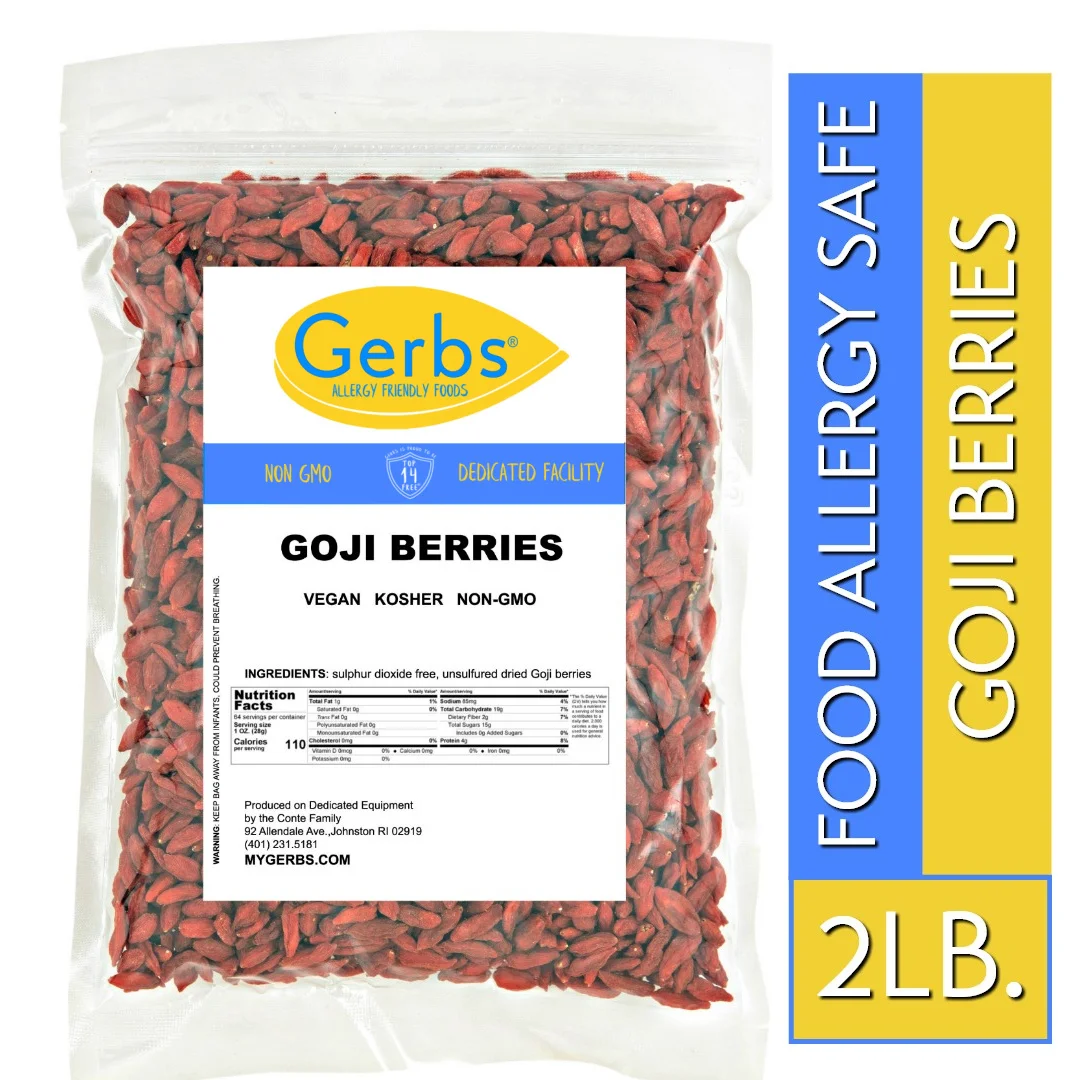
2 lb. re-sealable bag
-
4 lb. re-sealable bag
Ingredients
Goji Berries (Wolfberries)
Allergen Declaration
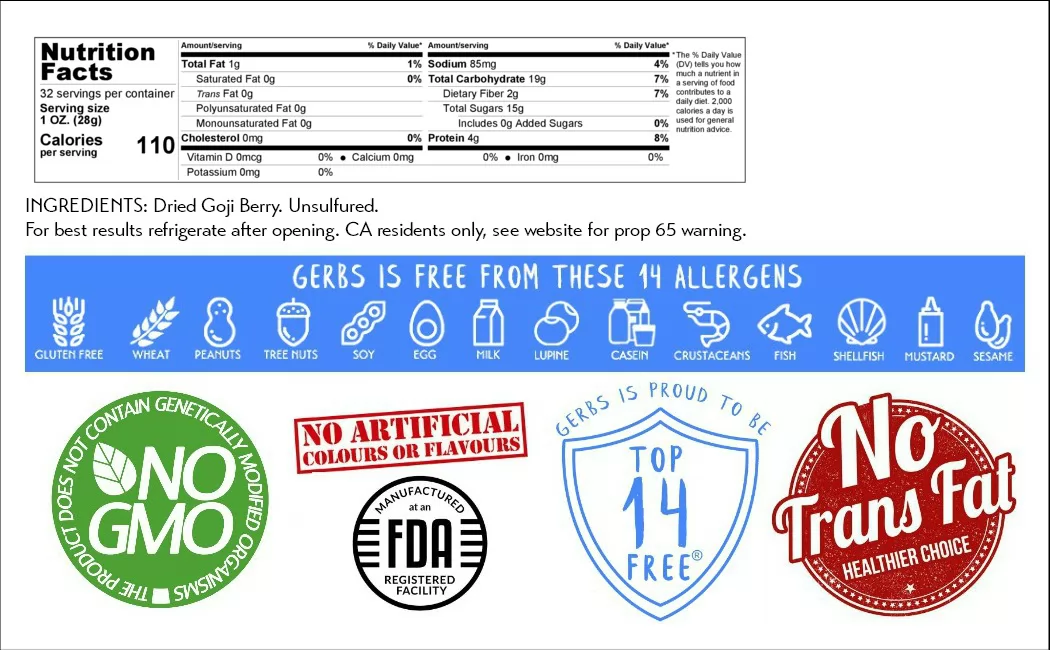
Free from: Gluten, Wheat, Peanuts, Soy, Lentils, Chickpeas, Lupin, Beans, Peas, Tree Nuts, Shellfish, Crustaceans, Mollusks, Fish, Sesame, Milk/Dairy, Eggs, Mustard, Sulfur Dioxide, and Potassium Sorbate.
Enjoy the sweet-tart goodness of one of nature’s most powerful superfruits with Gerbs Dried Goji Berries — a delicious and nutritious pantry staple.
Order today and taste the Gerbs difference!
Gerbs Dried Goji Berries (Wolfberries)
Sweet-Tart Superfruit • Antioxidant-Rich • Perfect for Snacking & Smoothies
⭐ Allergen Declaration Statement
Free from: Gluten, Wheat, Legume Family {Peanuts, Soy beans, lentils, chickpeas, and lupin, beans (kidney, black, pinto, navy, string, fava), and peas (green, split, black-eyed), plus others like mung beans, adzuki, and tamarind}, Tree Nuts {almonds, cashews, hazelnuts, macadamia nuts, pecans, pistachios, walnuts, brazil nuts, pine nuts, & coconut}, Shellfish aquatic invertebrates (crab, lobster, shrimp, prawns, crayfish), Crustaceans & Mollusks (clams, mussels, oysters, scallops, squid, octopus, snails), Fish {vertebrates having a backbone}, Sesame, Milk/Dairy, Eggs, Mustard, Sulfur Dioxide, Potassium Sorbate.
Product Overview
Introducing Gerbs Dried Goji Berries, also known as Wolfberries — a vibrant, nutrient-dense superfruit prized for its antioxidant power, sweet-tart flavor, and versatility.
These small red berries have been used for centuries in traditional wellness practices and are now loved worldwide as a delicious addition to trail mixes, smoothies, oatmeal, baked goods, and teas.
Gerbs Goji Berries are carefully hand packaged on dedicated Gerbs equipment in Johnston, Rhode Island, ensuring freshness and quality in every bag.
Available in 2 lb. and 4 lb. re-sealable bags, perfect for everyday snacking or bulk pantry stocking.
What Are Goji Berries?
Goji berries are small, bright red fruits traditionally grown in Asia and valued for their impressive nutrient profile.
Flavor & Texture
-
Taste: Sweet and tangy, often compared to a blend of cranberry and cherry
-
Texture: Soft and chewy when dried, similar to raisins
-
Finish: Slight earthy, herbal undertone that makes them uniquely satisfying
They’re delicious straight from the bag and easy to incorporate into both sweet and savory recipes.
Nutritional Powerhouse Superfruit
Goji berries are known for being one of the most nutrient-rich dried fruits available.
Nutritional Highlights (Per Serving)
-
High in Vitamin A (carotenoids for skin and vision)
-
Contains Vitamin C for immune support
-
Good source of Iron, Zinc, Potassium, and Selenium
-
Provides dietary Fiber for digestion
-
Includes 18 amino acids, including all essential amino acids
-
Packed with antioxidants like zeaxanthin and beta-carotene
Key Health Benefits of Goji Berries
✔ Antioxidant Protection
Goji berries contain powerful antioxidants that help fight oxidative stress and support overall wellness.
✔ Eye & Vision Support
Rich in zeaxanthin, which supports retinal health and may help protect against age-related vision decline.
✔ Immune System Support
Vitamins A and C, along with unique polysaccharides, help strengthen the body’s natural defenses.
✔ Digestive & Gut Health
High fiber content promotes regularity and supports healthy digestion.
✔ Energy & Vitality Boost
Iron and B vitamins contribute to natural energy production and reduced fatigue.
✔ Blood Sugar & Appetite Balance
Goji berries have a low glycemic impact and may help support healthy blood sugar levels when enjoyed in moderation.
As with many functional foods, goji berries may interact with certain medications. Consult your healthcare provider if needed.
How Goji Berries Are Dried
Goji berries are harvested when fully ripe, then gently dried to preserve nutrients, flavor, and shelf life.
Common Drying Process
-
Harvesting – Berries are picked at peak ripeness.
-
Cleaning & Preparation – Rinsed and carefully handled to avoid bruising.
-
Slow Drying – Sun-dried or mechanically dehydrated at controlled temperatures.
-
Final Sorting – Checked for texture, color, and quality.
-
Packaging – Hand packaged by Gerbs in Johnston, RI.
The result is a chewy, raisin-like berry that’s shelf-stable and nutrient-packed.
How to Enjoy Gerbs Dried Goji Berries
Goji berries are one of the easiest superfoods to add to your daily routine.
🍇 Easy No-Cook Uses
-
Snack straight from the bag
-
Mix into trail mix with nuts and seeds
-
Sprinkle on yogurt, granola, or oatmeal
-
Add to smoothie bowls for color and nutrition
-
Toss into salads for a sweet-tart pop
🍪 Baking & Recipes
-
Substitute for raisins in muffins, cookies, and scones
-
Add to energy bars or homemade granola
-
Stir into pancake or bread batter
☕ Tea & Traditional Uses
-
Steep in hot water for 5–10 minutes for goji berry tea
-
Simmer into herbal broths or wellness tonics
-
Enjoy the plumped berries after drinking the tea
🍲 Savory Cooking
-
Add to soups and stews for a traditional Chinese-inspired flavor
-
Mix into rice dishes or grain bowls
-
Pair with ginger, citrus, or warm spices
Pro Tips
-
Soak Before Use: Rehydrate in warm water for 10–20 minutes for a softer, juicier texture.
-
Flavor Pairings: Citrus zest, ginger, cinnamon, almonds, dark chocolate, coconut.
Product Details
Ingredients: Goji Berries (Wolfberries)
Ingredient Country of Origin: Product of United States, Canada, India, Turkey, or China
Packaging Procedure: Hand packaged on dedicated Gerbs equipment in Johnston, RI
Available Sizes: 2 lb. and 4 lb. re-sealable bags
Bring home the sweet-tart goodness of one of nature’s most powerful superfruits with Gerbs Dried Goji Berries.
Order now and taste the Gerbs difference!
Frequently Bought Together
Related products
-
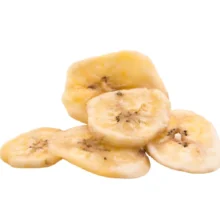
Banana Chips | Sweetened
Price range: $11.49 through $36.08 — available on subscription -

Dried Apricots | No Sugar Added
Price range: $25.99 through $43.68 — available on subscription -
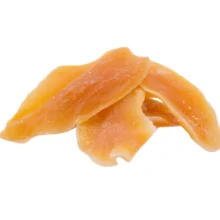
Dried Mango Slices | Sweetened
Price range: $14.49 through $39.88 — available on subscription -
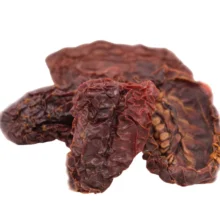
Sun-Dried Tomatoes
Price range: $22.99 through $43.68 — available on subscription
Customer Reviews
6 reviews for Dried Goji Berries | No Sugar Added
You must be logged in to post a review.
Shop by Category
Find Your Safe Favorites
Seeds
Dried Fruit
Snack & Trail Mixes
Granola
Grains
jnelko@hotmail.com (verified owner) –
Great product! Berries are soft on the inside, dry on the outside and not sticky or clumpy compared to other brands I have tried. Great to blend into your own mixes with seeds or granola.